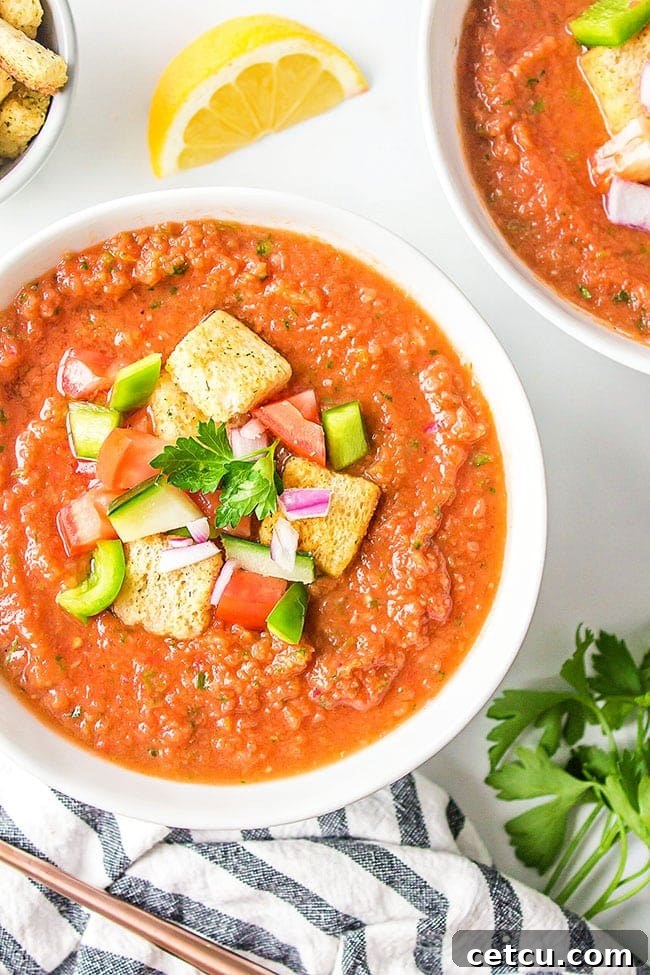
Refreshing No-Bread Gazpacho: Your Ultimate Summer Cold Soup Recipe
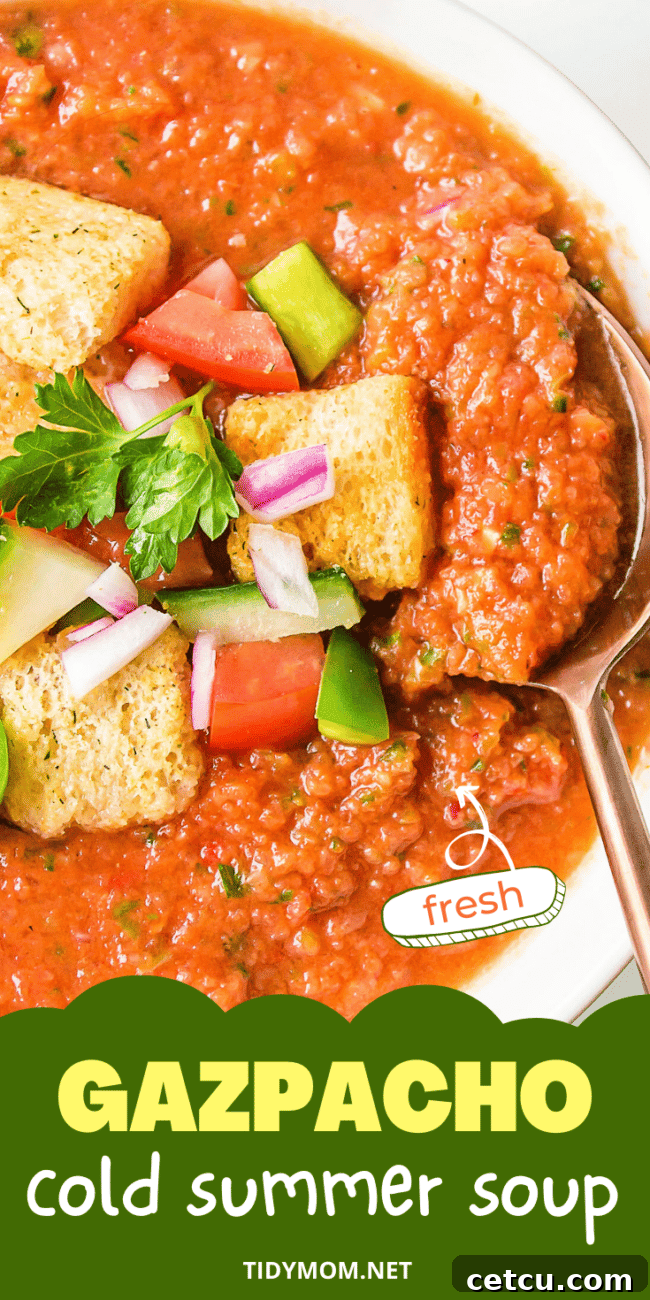
Beat the heat with a vibrant, tangy, and incredibly refreshing **Gazpacho soup**! This Spanish classic, bursting with ripe Roma tomatoes, fresh herbs, and robust garden vegetables, is a culinary explosion for your palate. Perfect as a light lunch, elegant dinner starter, or a cooling appetizer, gazpacho is the ultimate antidote to warm weather, delivering a bright and invigorating flavor experience.
As summer days beckon for “cool” recipes, our no-bread gazpacho stands out as a healthy and flavorful choice. Pair it with an Aperol Spritz or a zesty Pineapple Jalapeno Margarita for a truly refreshing experience. Elevate your summer meal by grilling some Corn On The Cob to complement a Fresh Roasted Corn & Black Bean Salad or a Grilled Corn And Zucchini Salad. This versatile cold Spanish soup provides a delightful contrast and rounds out any warm-weather spread.
Why You’ll Adore This Gazpacho Soup
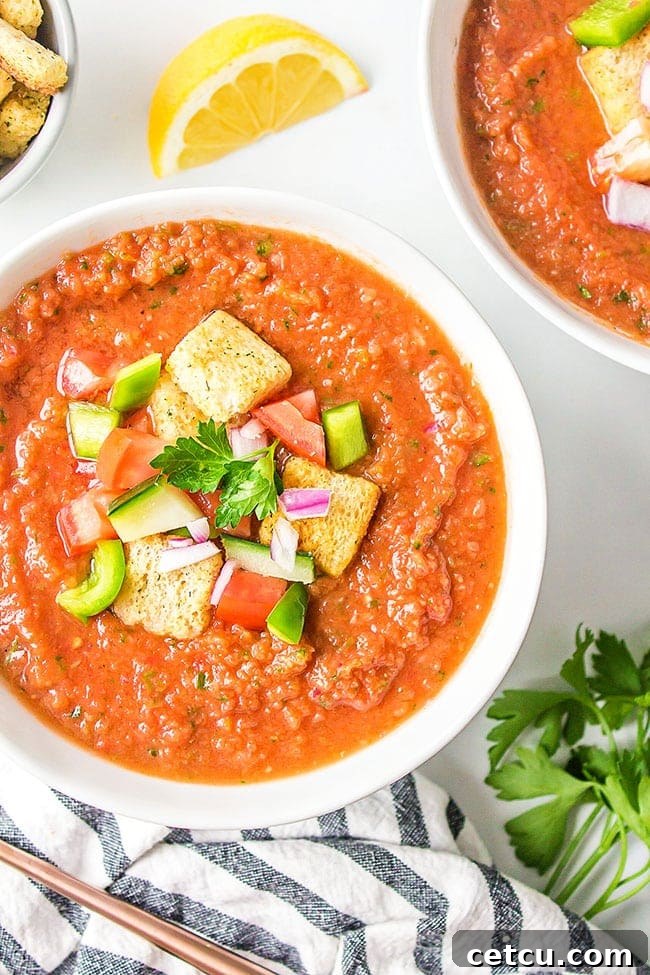
Prepare to fall in love with this deliciously healthy, lower-carb interpretation of an authentic gazpacho recipe, inspired by the sun-drenched region of Andalusia, Spain. We’ve crafted this version without bread, making it a fantastic choice for those seeking a lighter alternative without compromising on flavor.
- Unparalleled Freshness: This **summer gazpacho** is incredibly fresh, wholesome, and the perfect way to revitalize your body and spirit on a warm day. Its natural ingredients deliver a burst of energy and essential nutrients.
- Versatile Serving Options: Enjoy this **Spanish cold soup** in countless ways – as a quick, refreshing drink, a healthy snack, a satisfying light meal, or even as a vibrant “liquid salad” packed with goodness.
- Dietary-Friendly Delight: Our gazpacho soup recipe is thoughtfully designed to help you **keep carb counts down**, making it an excellent option for individuals with various dietary restrictions, including those following low-carb or gluten-free diets.
- Elegant Presentation: Serving this chilled soup makes for a delightful and unexpected surprise at any dinner party. When artfully garnished and presented in a cocktail or martini glass, it creates an incredibly elegant and sophisticated statement.
- Endless Customization: The beauty of making a recipe for gazpacho lies in its **unlimited variations**. Feel free to experiment with different vegetables, herbs, and spices to tailor it precisely to your taste preferences.
- Zero Waste Cooking: Make the most of your produce! Use any leftover vegetables from preparing your **summer soup** as colorful and flavorful garnishes, ensuring no ingredient goes to waste.
Presentation Perfection: Our Top Plating Tip
Elevate your gazpacho from delicious to dazzling with thoughtful plating and presentation! Serving this exquisite summer gazpacho in a chic glass or elegant stemware transforms it into an artistic and festive element of your meal. Imagine it in the sophisticated glasses shown in our Smoked Rosemary Bourbon Sour and The Perfect Paloma Cocktail recipes – the visual impact is truly stunning. These serving ideas add a touch of flair that will impress your guests and enhance the dining experience.
*(And yes, trying those delicious cocktail recipes is a pure bonus!)*
Essential Ingredients for Your Summer Gazpacho Soup
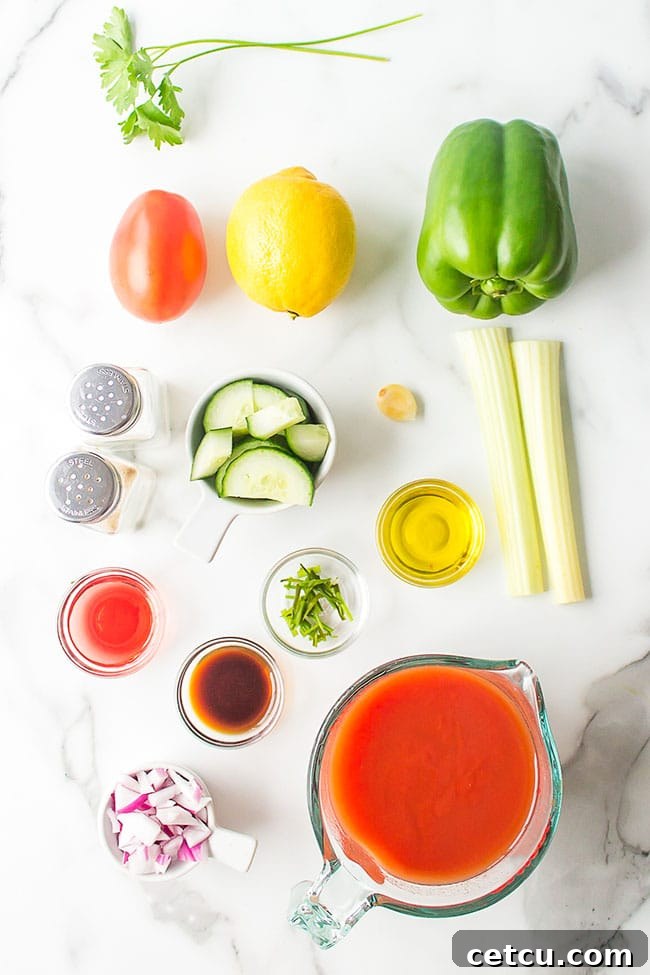
Crafting the perfect gazpacho begins with selecting the freshest, highest-quality ingredients. This is an ideal cold soup recipe that not only blooms aromatically but also intensifies in flavor as it gently matures over 2-3 days in the refrigerator, truly becoming a masterpiece of taste.
For specific amounts and detailed instructions, please refer to the complete printable recipe card located at the bottom of this post.
- Ripe Roma Tomatoes: These are absolutely perfect for a vibrant gazpacho summer soup due to their firm, meaty flesh, lower water content, and fewer seeds. Their intense flavor forms the backbone of the soup. Look for deeply colored, firm, and fragrant tomatoes.
- Green Bell Pepper: Adds a crisp, slightly bitter note that balances the sweetness of the tomatoes. Feel free to substitute with sweeter red, orange, or yellow bell peppers for a milder flavor and a pop of different color.
- Celery: Contributes a refreshing crunch and a subtle, earthy depth to the soup, enhancing its overall complexity.
- Cucumber: For standard garden variety cucumbers, it’s advisable to peel and seed them to avoid a waxy texture or excessive wateriness. However, soft-skinned and small-seeded varieties like Persian/mini cucumbers or English/hothouse cucumbers can be used as is, saving you prep time.
- Red Onion: Provides a sharp, pungent bite that beautifully complements the other fresh vegetables. Its vibrant color also adds to the visual appeal.
- Fresh Parsley & Chives: These fresh herbs are crucial for adding bright, herbaceous notes. Parsley offers a clean, peppery flavor, while chives lend a delicate oniony freshness.
- Garlic Clove: Minced finely, garlic infuses the soup with its signature aromatic warmth. Dread peeling garlic? A garlic peeler can be your new best friend in the kitchen!
- Red Wine Vinegar: This essential ingredient gives your cold soup its characteristic tartness, acidity, and invigorating zing. For a truly authentic taste and a nod to traditional Spanish cold soup, consider using sherry vinegar for its complex, nutty undertones.
- Fresh Lemon Juice: A squeeze of fresh lemon juice brightens all the flavors, adding a clean, citrusy lift to the gazpacho.
- Extra Virgin Olive Oil: The quality of your extra virgin olive oil can genuinely make or break a Spanish cold soup. Opt for a good quality, fruity, slightly bitter, and pungent olive oil to achieve that authentic, rich flavor profile.
- Salt & Fresh Ground Pepper: These basic seasonings are vital for enhancing and balancing all the flavors, bringing out the best in each vegetable.
- Worcestershire Sauce: Adds a fascinating layer of umami, contributing a salty-sweet, savory depth with a unique tangy finish that elevates the soup’s overall complexity.
- Tomato Juice: For ultimate convenience and ease, V8 juice is a fantastic option, providing a rich, savory tomato base. Alternatively, if you have the time, homemade tomato juice will elevate the flavor even further.
Crafting Your Summer Gazpacho: The Ultimate Liquid Salad
When you are ready to prepare this recipe, please refer to the full recipe card at the bottom of the page for precise measurements and instructions.
This gazpacho recipe is surprisingly painless to make, delivering incredible flavor with minimal fuss. While the initial prep work of chopping vegetables may take a little time, the effort is undeniably well worth it from the very first refreshing taste of this cold summer soup. You’ll quickly discover how rewarding it is to create such a vibrant and wholesome dish from scratch.
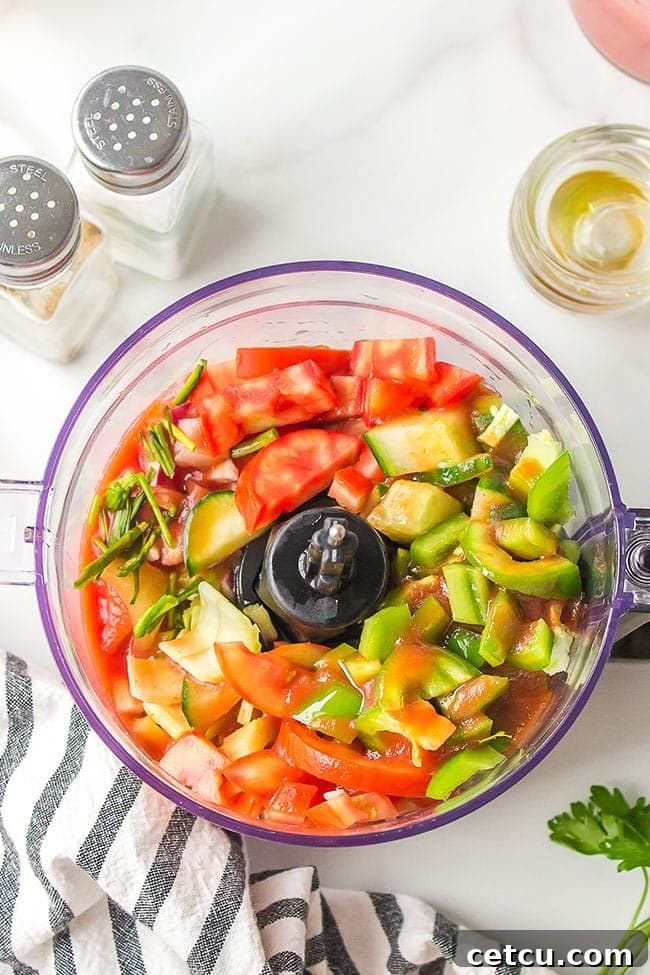
Beyond your basic prep tools and a good quality veggie wash to ensure your produce is sparkling clean, all you truly need for blending is a reliable blender, a versatile food processor, or a convenient handy immersion blender. Choose the tool that best suits your kitchen and preference for consistency.
- Prepare Ingredients: Wash and chop all your vegetables according to the recipe specifications. This is where your good quality veggie wash comes in handy.
- Batch Blend for Desired Consistency: Combine all the prepared ingredients in your chosen blending appliance. Process in batches if necessary, blending until you achieve your desired consistency. Some prefer a perfectly smooth gazpacho, while others enjoy a slightly chunky texture for more bite.
- Season to Perfection: Taste the freshly blended gazpacho and season generously with salt and pepper to your preference. Remember, flavors can mellow or intensify with chilling, so don’t be afraid to adjust.
- Chill Thoroughly: Transfer the cold soup into a covered glass bowl or pitcher. It’s crucial to chill it thoroughly in the refrigerator for at least four hours. This allows the flavors to meld and deepen beautifully, resulting in a more complex and satisfying taste.
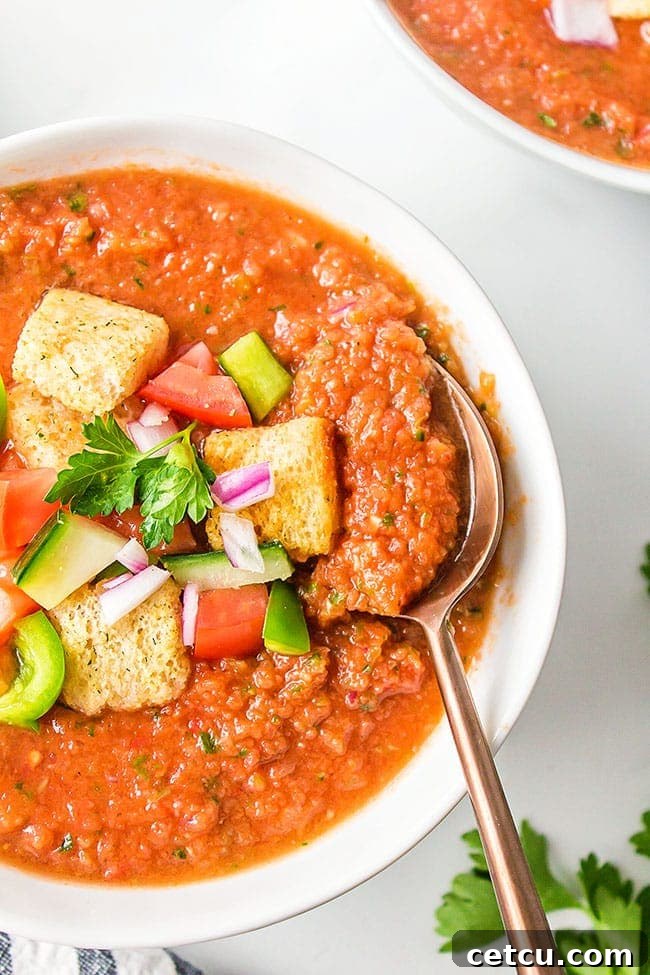
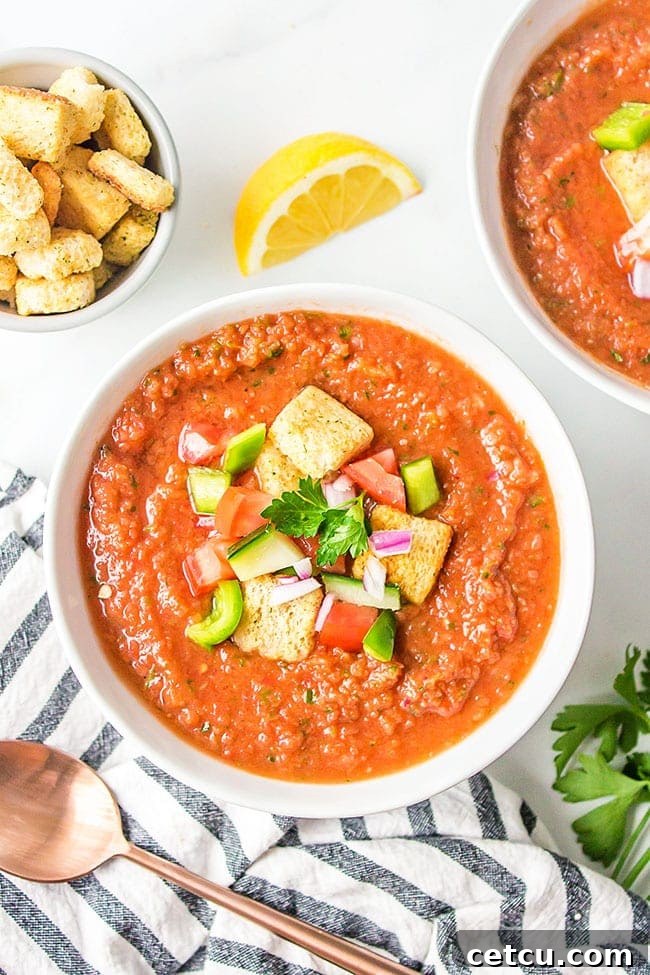
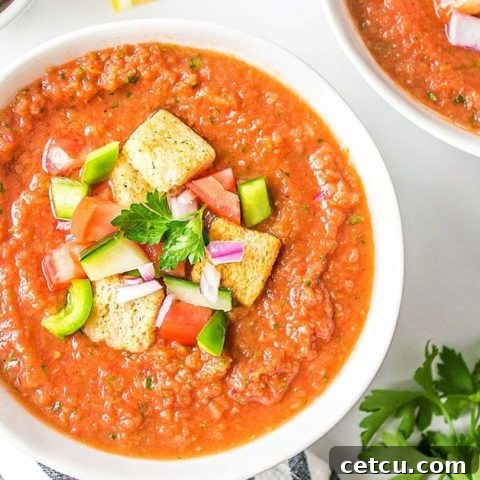
- Serve and Garnish: Before serving, give the gazpacho a good stir. Pour into your pre-chilled dinner bowls or elegant glassware. Now comes the fun part – garnishing to your heart’s content! *
Chef’s Insider Tip: Mastering Gazpacho Garnishes
*Garnishes are not just for show; they add texture, flavor, and an extra layer of culinary delight to your gazpacho. The possibilities are truly endless, allowing your taste buds to guide your creativity. Consider these enticing options:
- **Homemade Croutons:** For a satisfying crunch. (Check out our recipe for homemade croutons!)
- **Extra Virgin Olive Oil:** A final drizzle of high-quality EVOO enhances richness and aroma.
- **Fresh Herbs:** A sprinkle of chopped fresh parsley, chives, basil, or mint adds brightness.
- **Extra Veggies:** Finely diced bell peppers, cucumbers, or red onion for texture.
- **Avocado Slices:** Creamy avocado adds a luxurious, rich element.
- **Parmesan Crisps:** For a savory, cheesy crunch.
- **Toasted Pignolias (Pine Nuts):** Delicate and buttery, available here.
- **Toasted Crostini or Bruschettini:** Perfect for scooping up the soup, you can find crostini and bruschettini easily.
The Intriguing Origins of Cold Gazpacho Soup
If you’ve recently explored a few cold Spanish soup recipes, you’ve likely come across the conventional information tracing gazpacho back to the Andalusia region in Spain. This sun-drenched region is not only famous for its culinary contributions but also renowned for one of the oldest and most magnificent horse breeds, the pure Spanish Andalusian, adding to its rich cultural tapestry.
However, the true genesis of gazpacho is a subject of fascinating historical debate. Many historians assert that this quintessential Spanish cold soup originated during the era of Islamic Spain (711-1492 A.D.), a period that significantly shaped Spanish cuisine and culture. Yet, others contend that the fundamental base mixture for gazpacho developed much earlier, with roots stretching back as far as the Roman Empire. This perspective suggests that gazpacho’s humble beginnings as a simple, sustenance-providing meal far predates Islamic Spain’s claim to fame, making its history a layered and engaging story of culinary evolution.
Originally, these early versions were likely a basic peasant dish made from stale bread, garlic, olive oil, and water, pounded together. The addition of fresh vegetables, particularly tomatoes and peppers, came much later, thanks to the introduction of New World produce.
Gazpacho Recipe Notes & Expert Tips for Success
While variations of gazpacho soup recipes can include soaked bread and an array of fresh vegetables, sometimes even melons and certain fruits, along with fresh herbs for a truly cool and refreshing summer gazpacho, here are some essential tips for our no-bread version:
- Chill for Flavor Development: Gazpacho absolutely needs to spend a minimum of a few hours in the refrigerator. This crucial resting period allows the myriad flavors to develop fully and meld harmoniously, and ensures the soup chills completely for optimal refreshment. Overnight chilling is even better!
- Time-Saving Cucumbers: To significantly cut down on prep time, opt for **English or mini cucumbers**. Their delicate skins mean there is **no need to seed or peel** them, allowing you to simply chop and blend.
- Managing Garden Cucumber Bitterness: If you’re using traditional **garden cucumbers**, there’s a trick to reduce potential bitterness from cucurbitacin, a natural plant compound. Cut off the stem end, then “milk” the cucumber by rubbing the cut end against itself to draw out the white, bitter sap. Salting the diced cucumber for 15-20 minutes before blending can also help to lessen bitterness and draw out excess water.
- Enhancing Tomato Flavor: For a more intense tomato flavor, try **salting diced tomatoes** for about 30 minutes before adding them to the blender. The salt helps to break down the cell walls, releasing more of their flavorful juices and concentrating their natural sweetness.
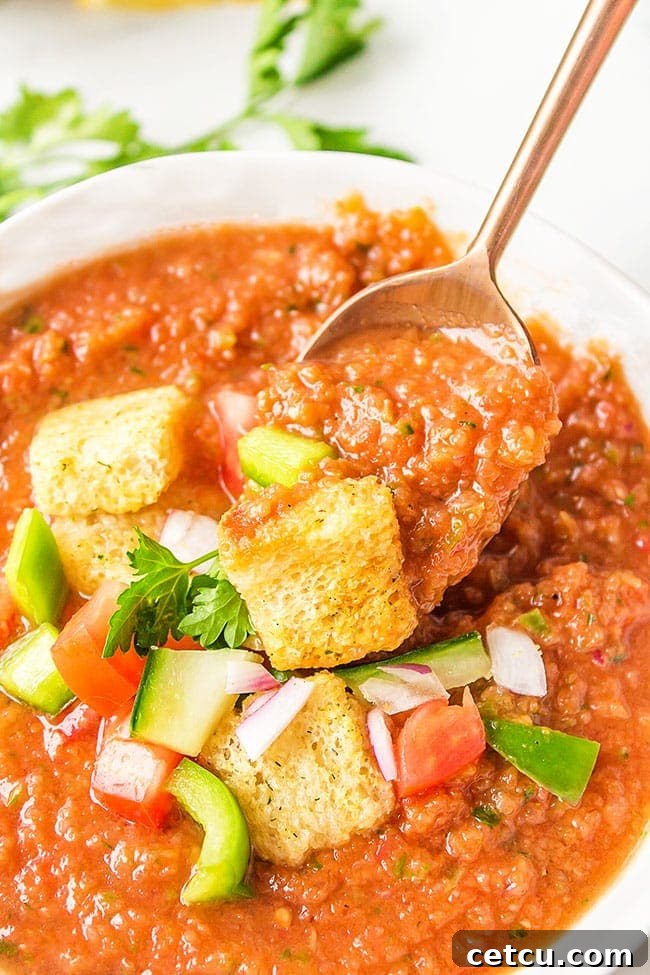
- Traditional Garnishes Explored: Beyond personal preference, here are some classic and delicious garnishes: a generous drizzle of high-quality olive oil, crunchy homemade croutons, finely chopped bell pepper and cucumbers for added texture, a sprinkle of chopped hard-boiled egg, elegantly chiffonade fresh basil, or delicate chopped fresh chives.
- Flavor Improves with Age: Prepared gazpacho truly becomes more complex and flavorful over time. It’s often **even better on the 2nd and 3rd days** as the ingredients continue to marry and deepen in taste. This makes it a perfect make-ahead dish!
- Traditionalist’s Touch (Optional Bread): If you are keen on exploring more authentic gazpacho recipes, you can indeed **add 2-3 slices of stale bread, soaked in water or vinegar**, squeezed of excess liquid, and then blended into the summer soup. This historically provides a creamy fullness and helps to round out the flavor profile.
Creative Substitutions & Flavorful Additions
Unlock endless possibilities to customize your gazpacho and make it uniquely yours. From unexpected fruits to alternative vinegars and savory pairings, here’s how to get creative:
- Embrace Fruity Notes: Don’t be shy about adding fruit! Watermelon, cantaloupe, strawberries, and honeydew, especially when paired with fresh mint, are all wonderful and create incredibly refreshing variations of gazpacho, adding a touch of sweet complexity.
- Vinegar Choices for Authenticity: When aiming to recreate an authentic Spanish cold soup flavor profile, prioritize choosing a good quality **sherry vinegar over red wine vinegar**. Sherry vinegar offers a deeper, more nuanced, and traditional taste.
- Balsamic for Sweet-Tang: For an added touch of sweetness and an even more intense, rich tang, consider substituting **Balsamic vinegar** for the red wine vinegar. It will give your gazpacho a sophisticated twist.
- Layering Flavors with Oil & Vinegar: For more complex and distinct flavor layers, try mixing in the olive oil and vinegar *after* the other ingredients have been blended together. This allows their individual characteristics to shine through.
- Creamy Indulgence: For a wonderfully **creamier cold soup**, add a dollop of sour cream, Greek yogurt, or even a spoonful of fresh guacamole as a garnish. These additions also contribute a lovely tang and richness.
- Perfect Crunchy Companions: Serve your gazpacho with something crunchy on the side. Our Savory Cheese Crisps or crispy Toasted Pita Chips are fantastic choices that provide a delightful textural contrast.
- Spice It Up Southwestern Style: If you’re craving a little “south of the border” flavor, you can easily **spice gazpacho up**! Incorporate fresh cilantro, finely diced jalapeño, a pinch of cumin, and a sprinkle of cheese shreds for a delicious Tex-Mex inspired gazpacho.
Frequently Asked Questions About Gazpacho Soup
Curious about gazpacho? Here are answers to some common questions about this delightful cold soup:
Why is gazpacho traditionally served cold?
Gazpacho is intentionally served cold because it is designed to be a highly refreshing dish, helping to cool you down in hot weather. While you *could* technically serve it warm or hot, its refreshing qualities and vibrant flavors are best enjoyed when thoroughly chilled, fulfilling its purpose as a perfect summer cooler.
Can I make gazpacho with canned tomatoes?
Absolutely! You can indeed make gazpacho using canned (store-bought) tomatoes for convenience, especially when fresh, ripe tomatoes are out of season. The key is to stick with a high-quality brand you trust and whose flavor you genuinely enjoy uncooked, as the tomatoes form the core of the soup’s taste. Look for whole peeled or diced tomatoes with good flavor.
Do I need to peel Roma tomatoes for gazpacho?
Peeling Roma tomatoes for gazpacho is often a matter of preference. While not strictly necessary for taste, it can result in a smoother, more refined texture. If you decide it’s important to peel your Roma tomatoes, the quickest and most efficient way is to blanch them:
- Make a small “x” incision on the bottom of each tomato.
- Carefully lower the tomatoes into boiling water for approximately three minutes, or until the skin just begins to curl at the “x.”
- Immediately plunge them into an ice bath for another three minutes to stop the cooking process.
- Drain the tomatoes, and the skins should slip off easily.
For a rustic gazpacho, leaving the skins on is perfectly acceptable and adds fiber.
The Role of Bread: Why Do Some Gazpacho Recipes Contain It?
The presence of bread in gazpacho recipes is a direct link to its ancient origins. Historically, authentic **gazpacho recipes were initially made with bread soaked in water or vinegar**. This practice harks back to simpler times when ingredients were scarce, and resourcefulness was key.
It is widely believed that Roman soldiers, needing a hearty and portable meal, created a gruel-like soup or paste from their basic rations of stale bread, garlic, salt, olive oil, and vinegar. This simple, energizing concoction sustained them during their long campaigns.
The Islamic version of gazpacho, which evolved in Spain, shared many of these fundamental ingredients but eventually saw the groundbreaking addition of tomatoes and green peppers – ingredients brought to Europe from the New World. Traditionally, this authentic cold Spanish soup was often prepared in a large wooden bowl or trough, known as a *dornillo*, where ingredients would be pounded and mixed by hand.
Gazpacho critics often claim that the inclusion of bread provides a creamy fullness and helps to round out the soup’s flavor profile, adding body and preventing it from being too thin. You have to admit, it was an ingenious and practical way to make stale bread palatable and nutritious, transforming a humble staple into a flavorful dish!
The “modern” fresh gazpacho, including the beloved tomatoes and peppers as we know it today, owes its existence to none other than Christopher Columbus, who introduced these “fruits” from the New World to Seville, Spain, forever changing the culinary landscape.
Our recipe, a no-bread gazpacho, offers a lighter, lower-carb alternative that still captures the vibrant essence and refreshing qualities of this classic Spanish dish, appealing to contemporary dietary preferences without sacrificing flavor or authenticity.
Like This Recipe?
We’d absolutely love to hear what you think! Please take a moment to leave a review below and share how much you enjoyed this refreshing gazpacho recipe!
Spanish Gazpacho
6 servings
30 minutes
4 hours
4 hours 30 minutes
Ripe Roma tomatoes, fresh herbs, and robust garden vegetables explode in this cold soup with a bright, tangy flavor. Try gazpacho for lunch, dinner, or as an appetizer. Either way, it really hits the spot on a hot day!
Ingredients
- 1 cup finely chopped ripe Roma tomatoes
- 1/2 cup finely chopped green pepper, cored
- 1/2 cup finely chopped celery
- 1/2 cup finely chopped cucumber, peeled and seeded
- 1/4 cup finely chopped red onion
- 1-2 tablespoons chopped fresh parsley
- 2 tablespoons fresh chives
- 1 clove garlic, minced
- 2-3 tablespoons red wine vinegar
- 1 tablespoon lemon juice
- 2 tablespoons extra virgin olive oil
- 1 teaspoon salt
- 1/4 teaspoon fresh ground pepper
- 1/2 teaspoon Worcestershire sauce
- 2 cups tomato juice
Instructions
- Combine all ingredients in a glass bowl. Use an immersion blender (or place in blender or food processor in batches) to the desired consistency (we like ours on the chunky side). Adjust seasonings, if needed, by adding more salt, and pepper to your taste.
- Place in a glass bowl or pitcher, cover, and chill thoroughly (at least 4 hours).
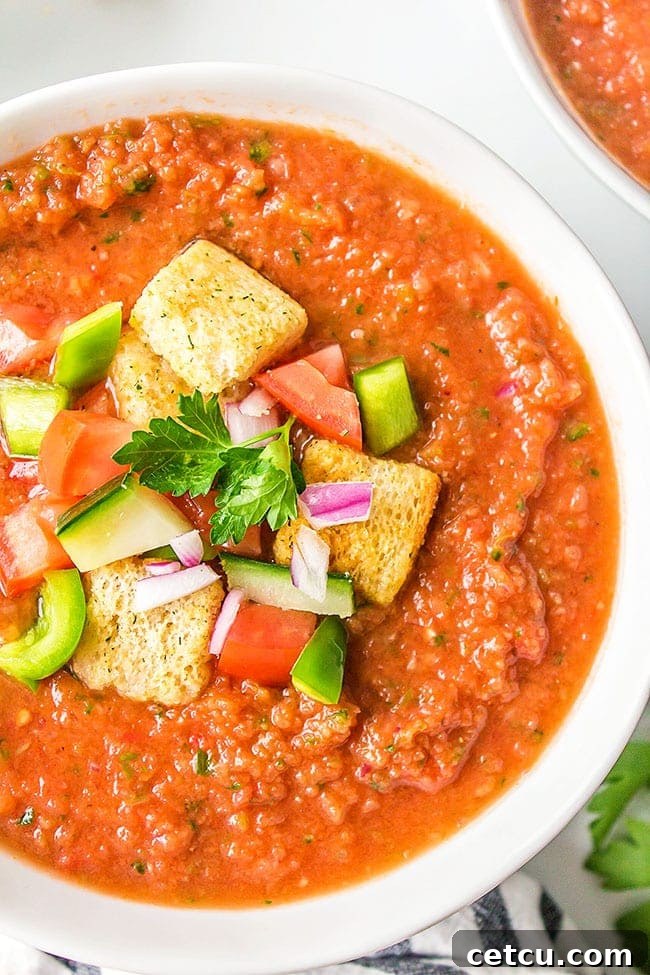
- Stir and serve in chilled cups/bowls. Top with homemade croutons, a drizzle of olive oil, fresh herbs, or chopped leftover ingredients (onion, cucumber, tomato).
Notes
- You can use an English cucumber, which does not need to be seeded or peeled for a smoother result.
- Traditional garnishes: A drizzle of high-quality olive oil, crunchy homemade croutons, finely chopped bell pepper or cucumbers, chopped hard-boiled egg, elegantly chiffonade fresh basil, or delicate chopped fresh chives.
- The soup becomes more complex and flavorful over time, so it’s even better on days 2 and 3! This makes it an excellent make-ahead option.
Nutrition Information:
Yield: 6
Serving Size: 1
Amount Per Serving:
Calories: 76Total Fat: 5gSaturated Fat: 1gTrans Fat: 0gUnsaturated Fat: 4gCholesterol: 0mgSodium: 587mgCarbohydrates: 8gFiber: 1gSugar: 5gProtein: 2g
Nutrition information is estimated based on the ingredients and cooking instructions as described in each recipe and is intended to be used for informational purposes only. Please note that nutrition details may vary based on methods of preparation, origin, and freshness of ingredients used and are just estimates. We encourage, especially if these numbers are important to you, to calculate these on your own for most accurate results.
Did you make this recipe?
Please leave a comment on the blog or share a photo on Instagram