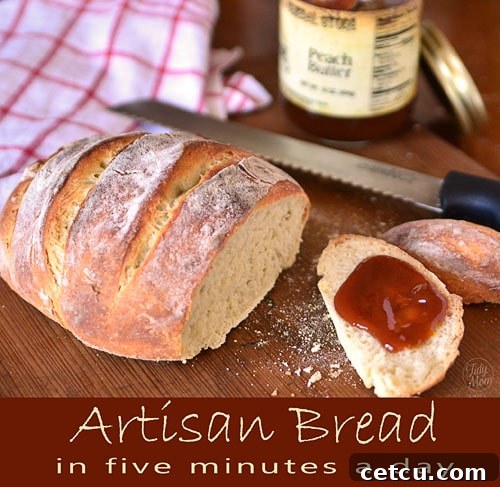
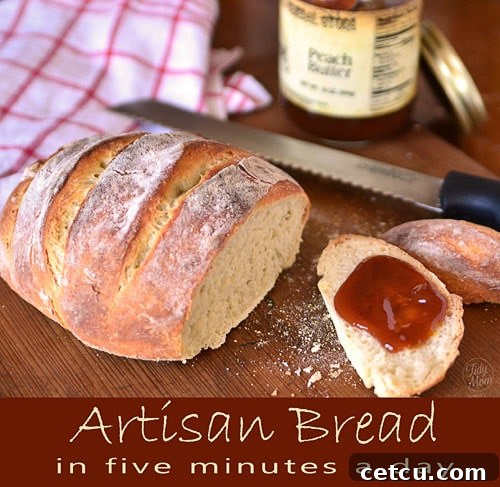
Imagine the aroma of freshly baked bread filling your kitchen every day, a crispy crust giving way to a soft, airy interior. This isn’t a fantasy for seasoned bakers; it’s a delicious reality, effortlessly achieved with a revolutionary method for crafting homemade Artisan Bread in 5 Minutes a Day. Forget complex steps and daunting techniques – this bread practically bakes itself, transforming your kitchen into a professional bakery with minimal effort.
This post may contain affiliate links. Please read my disclosure policy here.
For years, the dream of consistently baking delicious homemade bread remained just that – a dream. My household, much like many others, harbors a deep appreciation, some might even call it an addiction, for good, rustic bread. Not just any store-bought loaf, but the kind of substantial, flavorful bread that complements every meal and makes an ordinary sandwich extraordinary. Yet, despite this longing, I found myself repeatedly falling short of becoming the “bread maker” I aspired to be.
The journey to homemade bread often feels fraught with challenges. I once owned a bread machine, hoping it would be my salvation, but it quickly became an oversized, underutilized appliance, consuming valuable counter space. While convenient frozen dough options existed in the grocery store freezer, they simply couldn’t replicate the satisfaction and superior taste of bread made from scratch. The very idea of working with yeast felt intimidating. It’s notoriously finicky, requiring precise temperatures, careful measurements, and an arduous process of kneading, rising, and proving. This intricate dance of variables stood in stark contrast to my much more forgiving relationship with baking desserts, where sugar rarely betrayed me. Yeast, on the other hand, always seemed like a high-maintenance ingredient, frequently letting me down and leading me to believe that authentic bread-making was a skill forever beyond my grasp.
For far too long, my husband’s bread cravings went largely unfulfilled by my own baking endeavors. In hindsight, perhaps it was for the best, saving both his waistline and my sanity from the demanding rituals of traditional bread preparation. That was, until a few weeks ago, when my friend Kristen, a seasoned baker herself, mentioned her latest culinary triumph: the easiest loaf of bread she had ever made. Her enthusiasm was infectious as she described a method for “Artisan Bread in Five Minutes a Day.”
Initially, I approached her claim with a healthy dose of skepticism. After all, Kristen holds bragging rights when it comes to bread making, a realm where I considered myself a novice. Yet, she insisted that this particular bread-making technique would fundamentally change everything I thought I knew about baking. Her confidence piqued my interest, and truth be told, I secretly wished to acquire her seemingly magical bread-making skills without the usual hassle.
Unlocking the Secret to Rustic Homemade Artisan Bread
The beauty of this “Artisan Bread in Five Minutes a Day” method lies in its astonishing simplicity. The entire process begins with just four humble ingredients – flour, water, yeast, and salt – effortlessly combined in a bowl with nothing more than a wooden spoon. There’s no vigorous kneading, no complicated machinery, and certainly no need for precise temperatures or humidity control during the initial mixing phase. Once the dough comes together, it’s covered and allowed to sit at room temperature for approximately two hours for its first rise. This bulk fermentation requires no babysitting; you can go about your day while the yeast does its magical work, developing flavor and structure.
After the initial rise, the dough is gently transferred to the refrigerator. This is where the real magic of this method shines. The dough can be stored in the fridge for up to two weeks, becoming more flavorful and developing larger, more beautiful air pockets the longer it chills. This cold fermentation process is key to achieving that authentic artisan texture and taste, akin to a slow-proved sourdough, but without the starter maintenance. In our household, the dough rarely lasts the full two weeks, as we’ve been baking a fresh loaf almost every other day since discovering this recipe. It truly is that good, and the convenience factor is unmatched, allowing for spontaneous baking whenever the craving strikes.
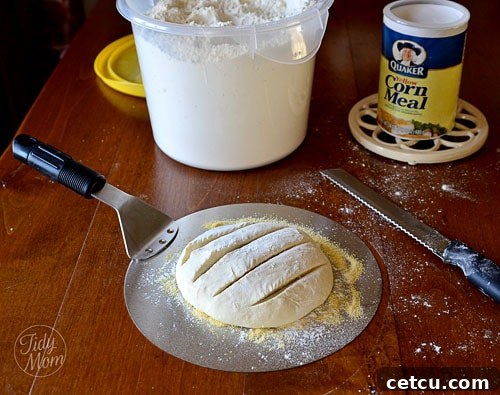
When you’re ready to bake, the actual active effort required is genuinely just five minutes – living up to the recipe’s namesake. You simply cut off a roughly one-pound portion of dough from the refrigerated batch (one recipe typically yields about three good-sized loaves). With wet hands, you quickly shape it into a rustic ball or oblong. This shaped dough then rests for about 40 minutes, allowing it to warm slightly and undergo a final proof. Just before baking, a few elegant slashes are made across the top of the loaf, not only for aesthetic appeal but also to allow steam to escape during baking, promoting an even rise and preventing blowouts. Finally, the dough is transferred to a preheated oven and baked for about 30 minutes until golden brown and crusty. It genuinely doesn’t get any easier or more rewarding than this.
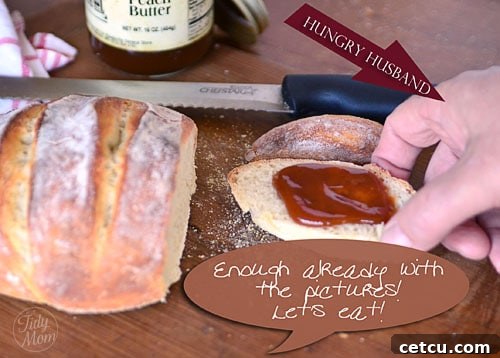
The impact of this method on our daily life has been nothing short of transformative. My husband, previously a bread addict with unfulfilled desires, now eagerly anticipates a fresh loaf almost daily. It’s a constant challenge to let the bread cool properly before slicing, as the irresistible aroma and promise of a warm, crusty bite are almost too much to bear. While patience is a virtue when it comes to bread – allowing it to cool prevents a gummy interior – the temptation is very real. This simple change has truly rocked our world, making the luxury of homemade artisan bread an everyday reality.
For those eager to embark on this incredible baking journey, the basic recipe and detailed instructions can be found at ArtisanBreadinFive.com. If you’re looking to explore a wider variety of recipes and expand your repertoire using this versatile basic dough, I highly recommend investing in the book by Jeff Hertzberg and Zoë François. It’s a fantastic resource that unlocks endless possibilities for delicious, homemade creations.
No need to be jealous of our daily bread feast when you can easily achieve the same culinary delight in your own home.

This simple method empowers anyone, regardless of baking experience, to create magnificent, rustic loaves with minimal fuss. So go ahead, embrace the whiskers, the camo, and the joy of freshly baked bread!
Essential Homemade Artisan Bread Supplies
While many tools can enhance your bread-making experience, remember that you don’t NEED all of these to get started. The beauty of this recipe is its simplicity and accessibility.
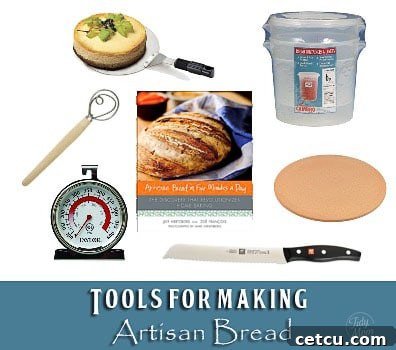
A few key supplies can make your artisan bread journey even smoother and more enjoyable. While not strictly necessary for your first loaf, these tools can significantly improve your results and overall experience:
Pizza Peel: Essential for safely transferring your shaped dough into a hot oven or onto a preheated baking stone. It minimizes heat loss and prevents burns.
6 Qt. Food Storage Container: Ideal for storing your large batch of dough in the refrigerator. Its size allows for proper rising and prevents spillage.
Pizza Stone (or a Dutch Oven): Crucial for achieving that signature crispy crust. A hot stone mimics a professional brick oven, providing intense, even heat. A Dutch oven also works wonders for trapping steam.
Bread Knife: A serrated knife is indispensable for cleanly slicing through crusty bread without tearing the delicate interior.
Oven Thermometer: An accurate oven temperature is vital for consistent baking results. Many oven thermostats are unreliable, so an external thermometer ensures your oven is truly at the desired temperature.
Danish Dough Whisk: While a wooden spoon works perfectly well, a Danish dough whisk makes mixing even the stickiest doughs a breeze, preventing lumps and ensuring thorough incorporation of ingredients.
Artisan Bread in Five Minutes a Day by Jeff Hertzberg and Zoë François: The foundational cookbook that introduces this incredible method and offers a wealth of additional recipes and tips for variation.
While these tools are recommended for enhancing your experience, remember that the core of this method is its simplicity. You can absolutely start with minimal equipment and still produce stunning results.
Are you an avid baker, or does the idea of homemade bread still seem like a distant dream?
You may also want to explore these helpful resources for mastering artisan bread:
- Goodlife Eats provides a very convenient printable version of the basic Artisan Bread in Five Recipe. It’s worth noting that their adaptation utilizes whole wheat flour and shapes the dough into elegant baguettes, demonstrating the versatility of the core recipe.
- For visual learners, Make and Takes offers an excellent post with detailed step-by-step pictures illustrating the process of making Artisan Bread in Five, following a method similar to what I’ve described here.
Love This Homemade Artisan Bread Recipe? Pin It for Later!
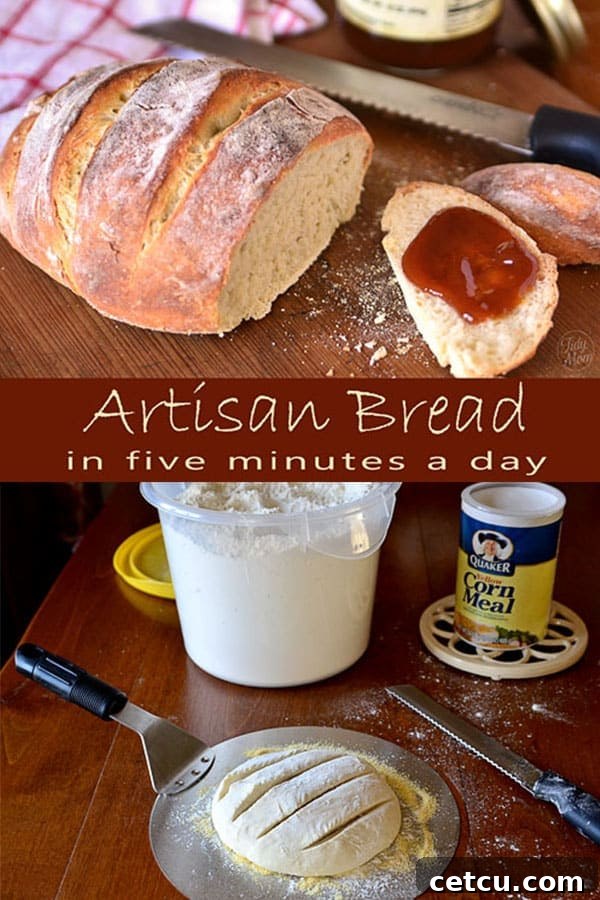
Embrace the joy of effortless baking and bring the irresistible aroma and taste of homemade artisan bread into your kitchen today!