
Elevate Your Food Photography: The Ultimate Guide for Food Bloggers
In today’s visually driven digital landscape, a captivating image is paramount, especially when it comes to the delectable world of food blogging. While mouth-watering recipes and engaging writing are crucial, they are simply not enough to stand out from the crowd. The visual presentation of your dishes can make or break your blog’s success, turning casual browsers into devoted followers, and transforming mere ingredients into an irresistible feast for the eyes.
If you’re a food blogger, content creator, or aspiring culinary photographer, you’ve likely encountered the challenges of capturing that perfect shot – the glistening glaze, the delicate crumb, or the vibrant hues of a freshly prepared meal. This is where Photographing FOOD, a premier downloadable e-zine series, steps in as your essential guide. Penned by professional food photographer and seasoned blogger, Taylor Mathis, this comprehensive resource is designed to empower you with the skills and techniques needed to transform your food photography from mundane to magnificent.
Why Exceptional Food Photography is Non-Negotiable for Bloggers
Gone are the days when a simple snapshot sufficed for online recipe sharing. The modern audience, accustomed to high-quality visuals across social media platforms like Instagram and Pinterest, expects nothing less than stunning imagery. Your food photography directly impacts several critical aspects of your blog:
- First Impressions: A visually appealing header image or recipe photo instantly grabs attention, enticing readers to click and explore your content further. Poor quality images, conversely, can lead to immediate disengagement.
- Engagement and Shareability: Beautiful food photos are highly shareable. They encourage readers to pin your recipes, share them on social media, and tag friends, significantly expanding your reach and driving traffic back to your blog.
- Credibility and Trust: Professional-looking photos convey a sense of expertise and care. They tell your audience that you value quality not just in your recipes, but in your entire presentation, building trust and authority in your niche.
- Monetization Opportunities: High-quality photography can unlock lucrative opportunities, from attracting brand sponsorships and collaborations to enhancing the perceived value of your own products or services. It elevates your overall brand identity.
- Storytelling: A great photograph tells a story. It can convey the freshness of ingredients, the warmth of a home-cooked meal, or the intricate details of a gourmet dish, making your food more desirable and memorable.
Understanding these impacts, Taylor Mathis created Photographing FOOD to equip you with the practical knowledge to not just meet, but exceed these visual expectations.
Unlocking Your Potential with Photographing FOOD E-zine
The Photographing FOOD e-zine is not just another photography guide; it’s an immersive learning experience structured into 8 easy-to-digest issues. Each issue delves into a different, crucial aspect of food photography, ensuring a holistic understanding of the craft. Taylor Mathis, with his wealth of professional experience, breaks down complex concepts into simple, actionable steps, making advanced techniques accessible to everyone, from absolute beginners wielding a smartphone to seasoned photographers looking to refine their skills with professional gear.
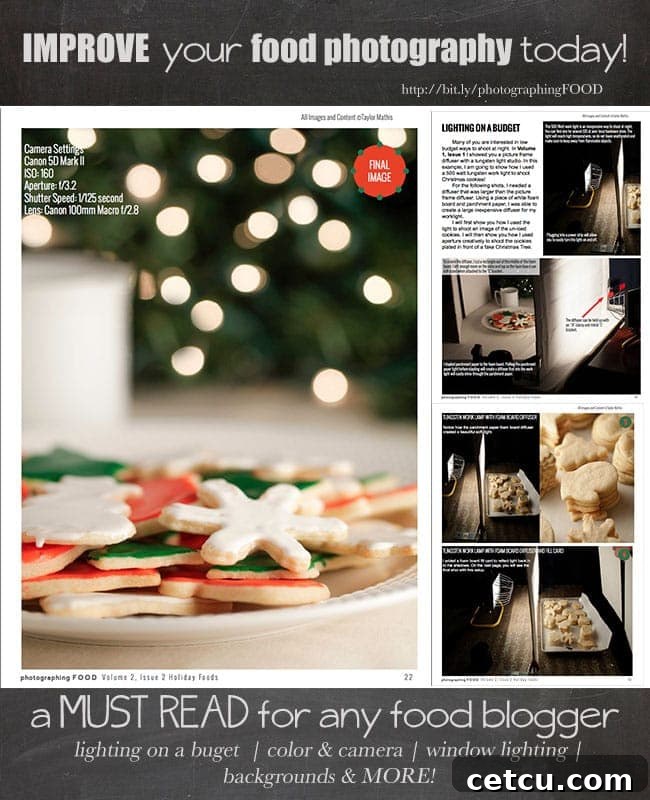
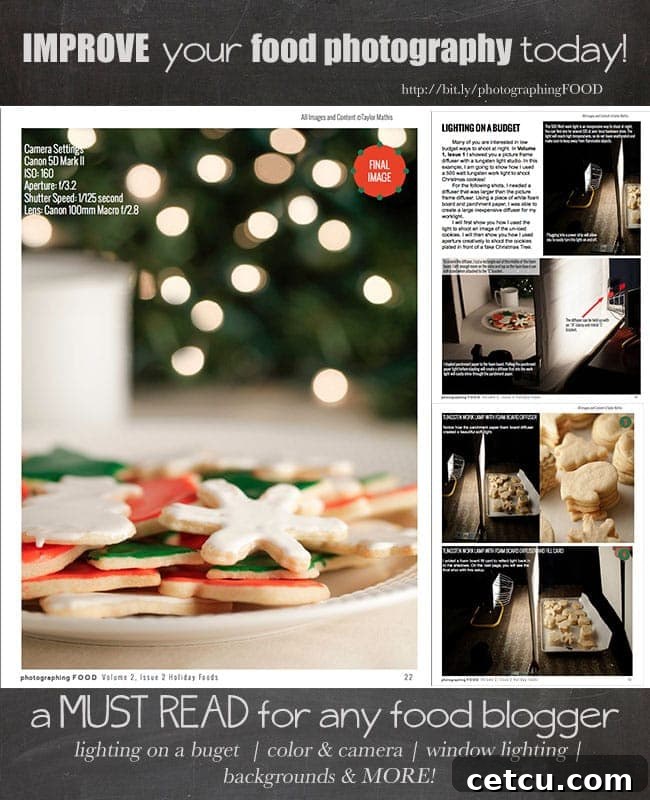
What sets this e-zine apart is its highly practical approach. Taylor doesn’t just tell you what to do; he shows you exactly how. Each issue is packed with detailed, step-by-step examples that illustrate precisely how to set up your shot. You’ll see the setup, the resulting final image, and critically, the exact camera settings used to achieve that stunning outcome. This transparency demystifies the process, allowing you to replicate and adapt techniques to your own unique culinary creations and shooting environments.
From mastering natural light to understanding the nuances of artificial illumination, from perfecting your composition to styling your dishes like a pro, the series covers it all. Imagine confidently capturing the steam rising from a hot dish, the delicate texture of a perfectly baked cake, or the vibrant colors of a fresh salad. Photographing FOOD makes this vision a reality.
Deep Dive into Key Topics: Lighting on a Budget & Beyond
One of the most common hurdles for food photographers, especially those starting out, is lighting. Natural light can be inconsistent, particularly during challenging winter months, cloudy days, or in kitchens with limited window exposure. Many beginners feel overwhelmed by the cost and complexity of professional lighting equipment. Taylor Mathis brilliantly addresses this challenge in issues like the “Holiday Issue,” which focuses on “Composition & Styling Series” and importantly, “Lighting on a Budget.”
In this particular issue, Taylor reveals ingenious solutions for achieving professional-looking lighting without breaking the bank. He demonstrates how to create an effective light setup using an incredibly affordable $10 light source readily available at any hardware store. This section is a game-changer for anyone struggling with dim kitchens or harsh shadows. More than just recommending equipment, Taylor walks you through the process of setting up this budget-friendly light, showing how it can dramatically improve the mood, clarity, and overall appeal of your food photos.
But good lighting isn’t just about the source; it’s about controlling and shaping that light. Taylor further empowers you by teaching you how to easily make your own light diffusers. Diffusers are essential for softening harsh light, eliminating stark shadows, and creating a more flattering, even illumination that brings out the best in your food’s textures and colors. Imagine transforming simple materials like parchment paper, white fabric, or foam boards into effective tools that rival expensive studio equipment. This DIY approach not only saves money but also fosters a deeper understanding of light manipulation.
Beyond lighting, the series meticulously covers essential elements such as composition and styling. You’ll learn fundamental composition rules like the rule of thirds, leading lines, and negative space, which guide the viewer’s eye and create visual harmony. Styling techniques are also explored in detail, covering everything from selecting the right props and backgrounds to thoughtful plating and garnishing, transforming a dish into a work of art ready for its close-up. These skills are critical for crafting images that not only look delicious but also tell a compelling story.
Unbeatable Value and a Limited-Time Opportunity
Each issue of Photographing FOOD is a treasure trove of knowledge, spanning 35-40 full-color pages. What makes this resource even more remarkable is its accessible price point: just $5 per issue. This investment is truly negligible when you consider the immense value and the immediate impact these lessons can have on your photography skills and, consequently, your blog’s success. It’s a fantastic gift for any food enthusiast or blogger in your life!
But here’s an opportunity you absolutely cannot afford to miss: Right now, for a strictly limited time, you can secure an incredible deal. Until Monday, December 2nd, you can save a whopping 25% off any and all issues of Photographing FOOD! PLUS, and this is truly exceptional, you can get the “Holiday Issue” (Composition & Styling Series) for FREE!
(Click the image below to download your free issue and begin your journey)
This is the perfect moment to experience Photographing FOOD firsthand, without any commitment. The FREE Holiday Issue, focusing on “Lighting on a Budget” and essential composition and styling principles, offers a fantastic introduction to Taylor Mathis’s teaching style and the practical value packed into every e-zine. Discover how a mere $10 light can revolutionize your winter shooting and how a DIY diffuser can create soft, inviting photos that make people hungry!
Don’t delay! Download Volume 2 Issue 2 for FREE now through December 2, 2013 (regularly $5).
See It in Action: Watch the Promo Video
Curious to see what Photographing FOOD is all about before diving in? Get a sneak peek into the world of professional food photography with the compelling promo video. It offers a glimpse into Taylor Mathis’s expertise and the quality of content you can expect from the e-zine series.
Photographing FOOD Promo from Sara Mathis Productions on Vimeo.
This exclusive offer, including the free Holiday Issue and 25% off all others, is a fleeting opportunity. Mark your calendars: on Tuesday, December 3, 2013, all issues will revert to their standard price of $5 each. Act now to seize this incredible value and embark on a journey to truly master your food photography skills!
My Personal Endorsement: A Must-Have Resource
As a fellow blogger, I can personally attest to the transformative power of the Photographing FOOD e-zines. I have every single issue, and they have been an invaluable resource in honing my own photography skills. Taylor’s ability to explain complex concepts in an approachable manner, combined with the practical, step-by-step guidance, has made a tangible difference in the quality of my blog’s visuals.
If you’re looking for more insights into how these e-zines can elevate your craft, I’ve shared my detailed reviews of various issues:
- Learn to take pictures that make people HUNGRY
- Photographing FOOD – Issue 2: Mastering Light and Composition
- Photographing FOOD – Issues 3 and 4: Advanced Techniques for Stunning Shots
- Photographing FOOD – Issues 5 and 6: Styling, Storytelling, and Post-Processing
Beyond capturing the perfect shot, post-processing is a critical step in achieving professional-grade food photography. My personal favorite tool for editing my photos is RadLab. It simplifies the editing workflow, allowing for quick adjustments and enhancements that bring out the best in your images, from color correction to sharpening and overall aesthetic refinement. Combining the insights from Photographing FOOD with a powerful editing tool like RadLab creates an unstoppable duo for producing truly captivating visuals.
My favorite tool for editing my photos!

Disclaimer: This is not a sponsored post. My love for Photographing FOOD e-zines is genuine, and I personally own every issue. This post does, however, contain an affiliate link for the product being promoted.